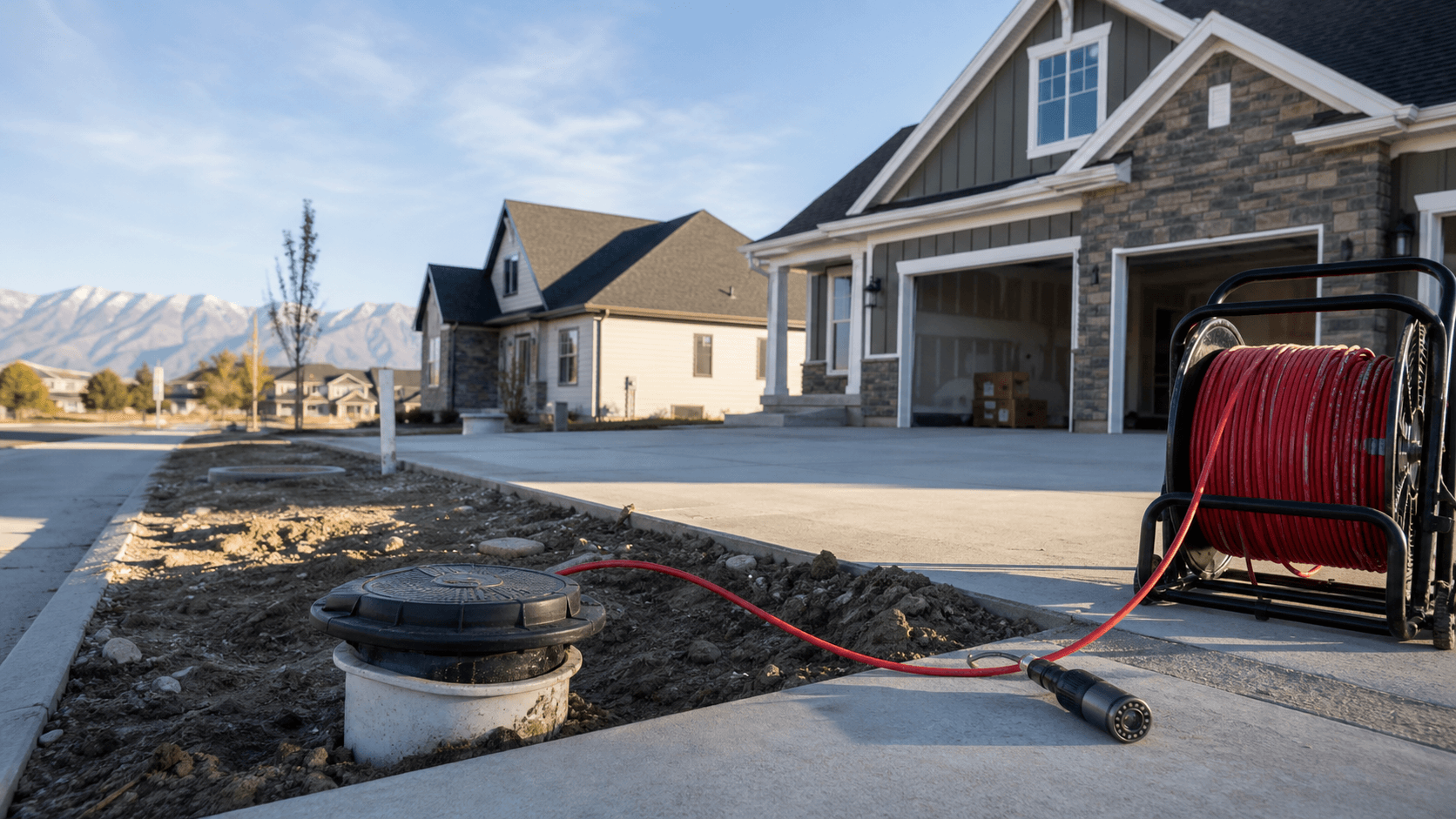
If you are listing a home in Utah Valley, a pre-listing sewer scope is not just another inspection add-on. It is a way to control one of the most expensive surprises that can show up after you already have photos, showings, offers, and deadlines moving.
This matters in Provo, Orem, Lehi, American Fork, Pleasant Grove, Spanish Fork, Springville, and the surrounding Utah County market because the housing stock is mixed. A single week of showings can include century-old Provo homes, 1970s Orem ramblers, newer Lehi builds, and remodeled homes with landscaping that has changed the original sewer access.
A seller-ordered sewer scope does not make the home "problem free." It gives the listing side facts before the buyer's due-diligence clock starts.
Why Utah Valley listings are a different sewer conversation
Generic seller advice usually says, "Get inspections before listing so there are fewer surprises." That is true, but it is too broad for Utah Valley.
Here, the sewer risk depends heavily on the city, age, lot, and construction pattern:
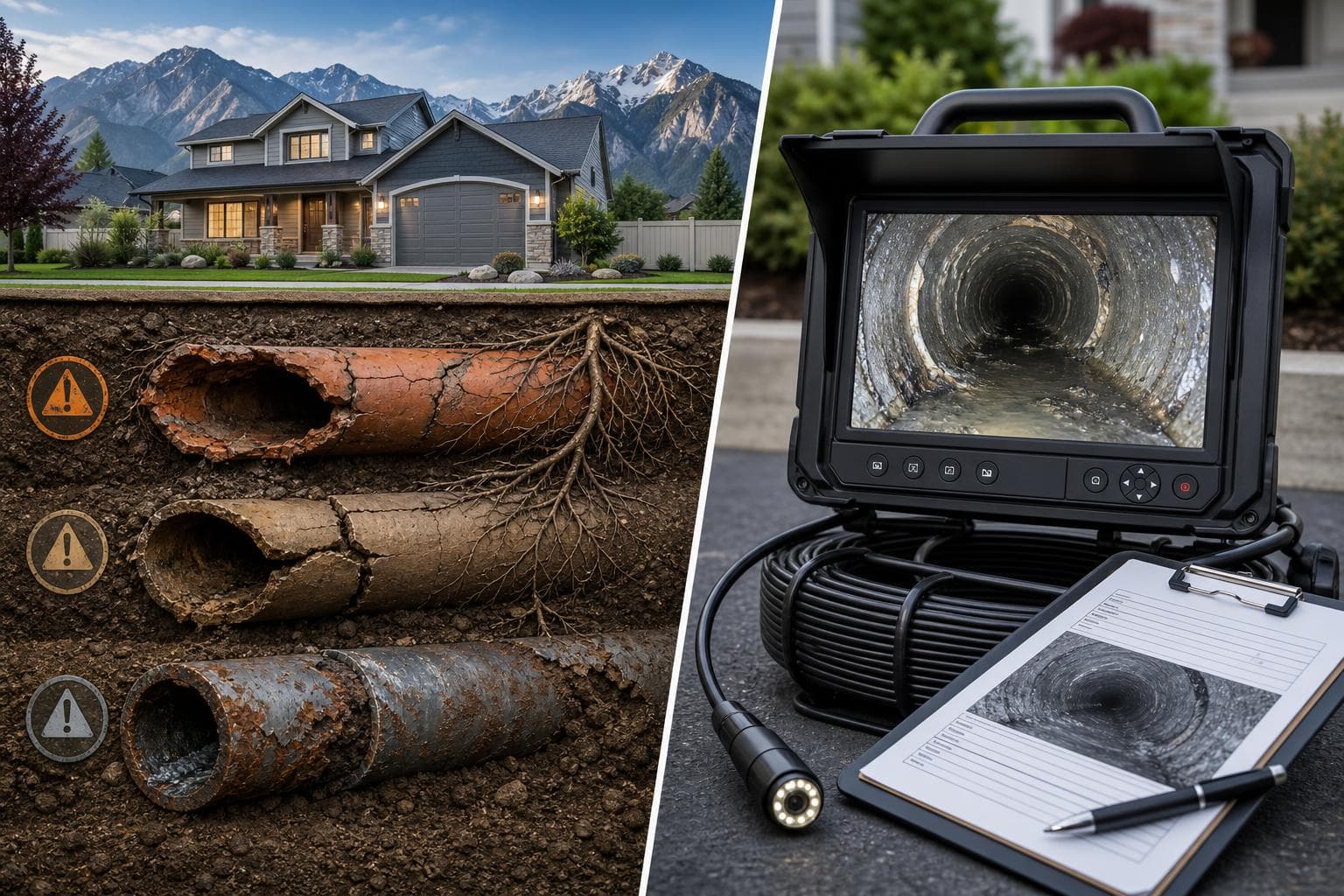
- older Provo and Springville homes may have aging clay, cast iron, or Orangeburg-era lines
- Orem and Pleasant Grove homes often combine mature trees with original laterals
- American Fork and Spanish Fork listings can have longer runs, additions, or yard changes that complicate access
- Lehi, Saratoga Springs, and Eagle Mountain homes are newer, but can still have slope, settling, debris, or installation issues
- remodels and flips sometimes improve the visible house while leaving the underground line undocumented
That mix is why a Utah Valley listing agent should treat the sewer line as a local due-diligence issue, not a generic home-maintenance topic.
When to schedule a pre-listing sewer scope in Utah Valley
A pre-listing sewer inspection is most useful when the home has one or more risk signals:
- built before the 1980s
- mature trees near the park strip, driveway, front yard, or likely sewer path
- prior backups, slow main drains, or repeat main-line cleanings
- no recent sewer video available
- unclear cleanout access
- a finished basement, tight closing timeline, or high-stakes listing launch
- a seller who wants fewer buyer objections during inspection negotiations
Newer homes are not automatically in the clear. In fast-growth areas, a pre-listing scope can still be useful when there is settlement, a long lateral, unclear cleanout access, construction debris risk, or any history of slow drains.
What listing agents can do with the report
The point is not to turn MLS remarks into a plumbing essay. The point is preparation.
If the line looks clean, the agent can keep the video/report ready for serious buyers, the buyer's agent, or the transaction file. It gives the listing side a simple answer when the buyer asks whether the sewer has been checked.
If the scope finds an issue, the seller and agent can decide before launch whether to:
- clean the line and rescope
- gather a contractor bid before showings
- repair before listing
- disclose the known condition clearly
- price with the condition in mind
- leave the buyer room to choose their own contractor
That timing matters. A seller who learns about root intrusion two weeks before listing has options. A seller who learns about it two days before the buyer's deadline mostly has pressure.
Realtor checklist before listing photos
Listing agents do not need to become sewer experts. They just need enough documentation to keep the deal from getting blindsided later.
Before photos and showings, a Utah Valley listing agent can ask:
- Has the seller had any backups, slow drains, sewer cleaning, or main-line repairs?
- Is the cleanout visible and accessible?
- Is the home older, heavily landscaped, remodeled, or finished below grade?
- Would a sewer surprise materially affect pricing, concessions, or the launch timeline?
- If the report is clean, should it be held for serious buyers or shared during due diligence?
- If the report has findings, should the seller repair, clean, bid, disclose, or price around it before going live?
That simple checklist turns a vague "maybe we should scope it" conversation into a clear listing-prep decision.
Utah Valley examples where pre-listing scopes make sense
Provo and Springville older homes
Older homes can be strong listings, but buyers often get nervous when sewer condition is unknown. If the home has mature trees, an older lateral, or a finished basement, a pre-listing scope can help the agent separate real risk from buyer anxiety.
Orem and Pleasant Grove ramblers
Many of these homes are attractive to families and first-time move-up buyers. They may look well cared for above ground while still having original underground pipe. A clear sewer report can remove a common objection before it becomes a negotiation fight.
Lehi, Saratoga Springs, and Eagle Mountain newer builds
Newer pipe material helps, but it does not eliminate installation or slope problems. In newer neighborhoods, the scope is less about "old pipe" and more about confirming the line was installed and performing correctly.
Flips and remodeled listings
When a home has new finishes, buyers often scrutinize what was not updated. A sewer scope helps the listing side answer one of the biggest unseen-system questions without guessing.
What the seller should expect from a useful scope
A pre-listing sewer scope should give more than a quick verbal "looks fine."
Look for:
- video footage of the accessible main sewer lateral
- distance markers for important findings
- plain-language notes on pipe material and condition
- still images of roots, offsets, cracks, bellies, blockages, or clean pipe sections
- a practical next step: monitor, clean, repair, bid, or no immediate action
- delivery fast enough to support listing prep
That documentation is what makes the inspection useful to a seller, not just the camera run itself.
For listing agents, the most useful report is the one a client can actually understand. Video, still images, distance markers, and plain-language next steps are easier to use in a listing conversation than a vague plumbing opinion.
Disclosure and strategy
Utah sellers should talk with their real estate agent or attorney about disclosure duties. In general, once a seller knows about a material sewer issue, it should be handled carefully and honestly.
That is not a reason to avoid looking. It is a reason to avoid getting surprised.
The seller disclosure process already asks about sewer or septic systems, known defects, slow or clogged drains, broken sewer lines, and repairs. A sewer scope helps turn unknown risk into documented condition. If the line is clean, that can support buyer confidence. If the line has a problem, the seller can decide how to address it before the buyer controls the timeline.
Repair before listing or offer a credit?
There is no single right answer. It depends on severity, timeline, cost, and buyer expectations.
Repair before listing can make sense when:
- the issue is severe enough to scare buyers
- the seller has time to do the work properly
- the repair can be documented with a follow-up scope
- the listing strategy depends on reducing objections
A credit, price adjustment, or disclosed as-is approach can make sense when:
- bids vary by repair method
- the buyer may prefer their own contractor
- the issue is limited and clearly documented
- the seller's timeline does not allow quality repair work before launch
For buyer-side negotiation context, see our sewer scope negotiation playbook and our guide to who pays for a sewer scope in Utah County.
Pre-listing scope vs buyer's sewer scope
A seller-ordered scope does not stop a buyer from ordering their own inspection. Many buyers still will, especially on older homes.
The seller's scope changes the starting point.
Without it, the first real sewer information may arrive during buyer due diligence, when deadlines are tight and emotions are higher. With it, the listing side already knows whether the line appears clean, needs maintenance, or deserves repair bids.
That can make the buyer's scope a confirmation step instead of the first surprise.
What to schedule before the appointment
Before the sewer scope, sellers and agents should confirm:
- Where the cleanout is located
- Whether the main lateral can be accessed safely
- Whether video and written notes are included
- How quickly results will be delivered
- Whether a follow-up scope is available after cleaning or repair
If cleanout access is uncertain, schedule early. Access issues are much easier to solve before photos, showings, and offer deadlines are already stacked up.
FAQ: Utah Valley pre-listing sewer scopes
Should every Utah Valley seller get a sewer scope before listing?
No. But sellers should strongly consider it for older homes, homes with mature trees, prior drain symptoms, finished basements, or listings where the agent wants fewer due-diligence surprises.
Is this mostly for Provo and Orem homes?
Those cities have many homes where it makes sense, but the logic applies across Utah Valley. American Fork, Pleasant Grove, Springville, Spanish Fork, Lehi, and nearby markets can all have sewer issues depending on age, lot, access, and installation quality.
Can a pre-listing sewer scope help the home sell faster?
It can reduce inspection friction, especially when the report is clean or when known issues were handled before launch. It is not a guarantee of a faster sale, but it gives the agent better information to work with.
What if the sewer scope finds roots or an offset?
Do not panic. Review the video, understand severity, and decide whether to clean, repair, gather bids, disclose, price accordingly, or let the buyer evaluate it with full documentation. The benefit is learning early.
Should the seller share the sewer scope report with buyers?
Ask your listing agent how they want to handle report sharing and disclosure. Many sellers keep the report available for serious buyers or during due diligence.
Is this different from a general pre-listing home inspection?
Yes. A general home inspection reviews visible and accessible systems. A sewer scope uses a camera to inspect the underground sewer lateral. For a deeper comparison, read sewer scope vs home inspection in Utah.
Bottom line for Utah Valley sellers and agents
A pre-listing sewer scope gives the listing side control over timing. That is the real value.
Instead of waiting for the buyer's inspector to discover the first sewer facts, the seller and agent can prepare, document, disclose, repair, price, or negotiate from a stronger position.
If you are preparing a Utah Valley listing and want sewer documentation before showings begin, book an independent sewer scope. If you are a listing agent trying to protect a launch timeline, send the address and timing notes when you schedule so the report can be delivered with the details your seller will actually need.
Have timing or access questions first? Review the TrueView sewer scope FAQ before scheduling.