Most homebuyers assume their general home inspection covers everything. It doesn't.
A standard home inspection evaluates the visible, accessible parts of a property — roof, foundation, electrical, plumbing fixtures, HVAC. What it almost never includes is the sewer lateral: the underground pipe connecting the house to the city sewer main.
That gap matters. A sewer line replacement can cost $8,000–$25,000, and it's one of the few major systems that's completely invisible without specialized equipment.
This guide breaks down what each inspection covers, where they overlap, and why smart buyers order both. For Salt Lake City-specific pricing and process, see Sewer Scope Inspection Salt Lake City Guide.
What a general home inspection covers
A licensed home inspector evaluates the condition of a property's major systems and structures. A typical inspection includes:
- Roof and exterior — shingles, flashing, gutters, siding, grading
- Foundation and structure — cracks, settling, moisture intrusion
- Electrical — panel, wiring, outlets, GFCI protection
- Plumbing fixtures — faucets, toilets, water heater, visible supply lines
- HVAC — furnace, AC, ductwork, thermostat
- Interior — windows, doors, walls, ceilings, insulation, ventilation
- Attic and crawl space — where accessible
A home inspector will run faucets, flush toilets, and check for visible leaks. But they're evaluating what's above ground and accessible. They don't send a camera underground.
What a general home inspection does NOT cover
This is where buyers get surprised. Most standard home inspections explicitly exclude:
- Sewer lateral condition — the underground pipe from house to street
- Septic systems — require a separate septic inspection
- Well water testing — separate lab analysis
- Mold testing — visual observation only, no lab sampling
- Radon — requires a separate test
- Pest/termite — separate WDI inspection in most states
The sewer line exclusion is the most financially dangerous one on this list. A roof issue is usually visible. A foundation crack shows itself. But a sewer line can be completely failed underground with zero symptoms inside the house — until the first backup.
What a sewer scope inspection covers
A sewer scope is a focused inspection of one system: the sewer lateral.
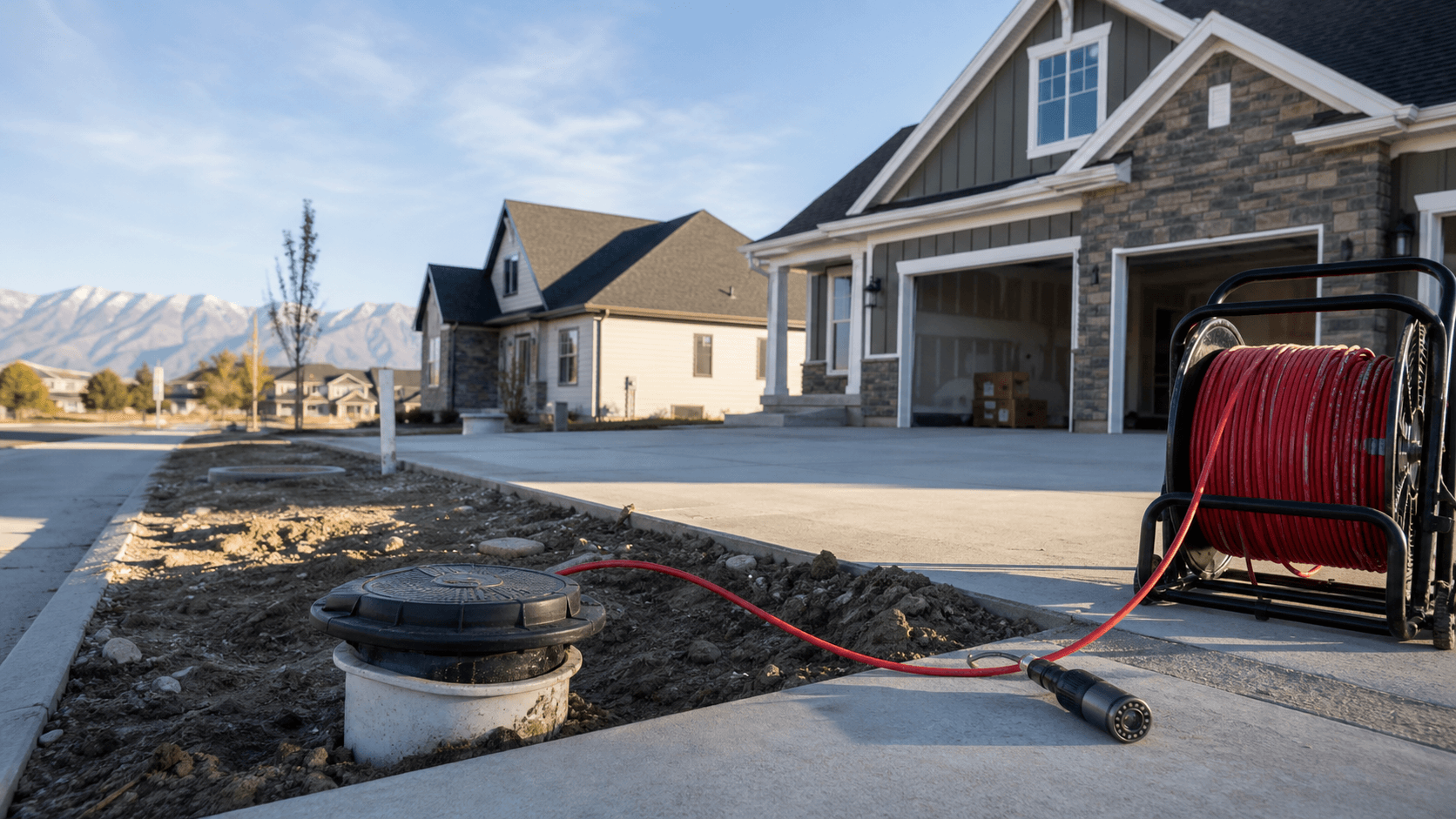
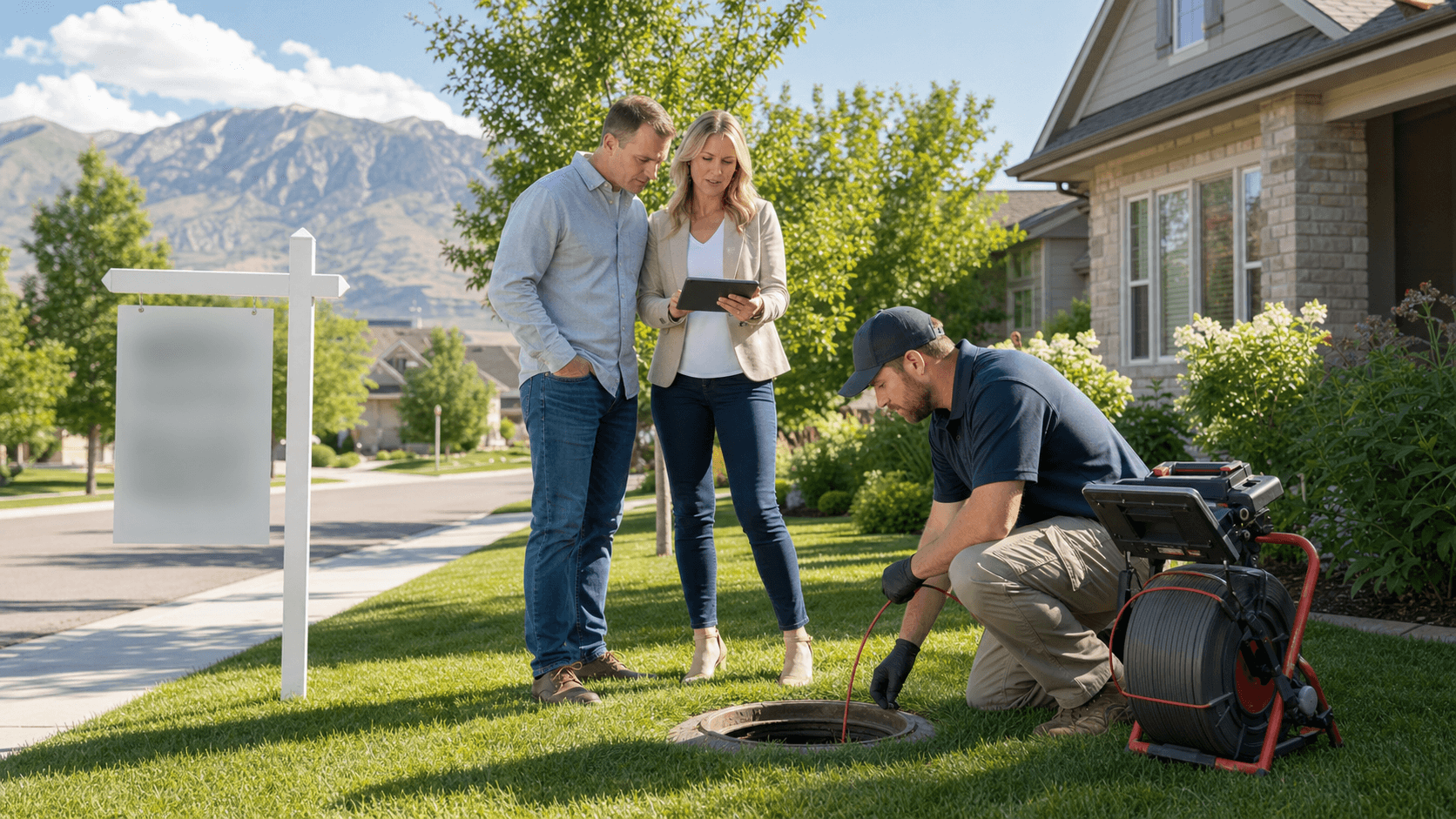
A technician inserts a waterproof HD camera through an accessible cleanout and runs it through the full length of the line — typically from the house to the city connection. The camera records everything in real time.
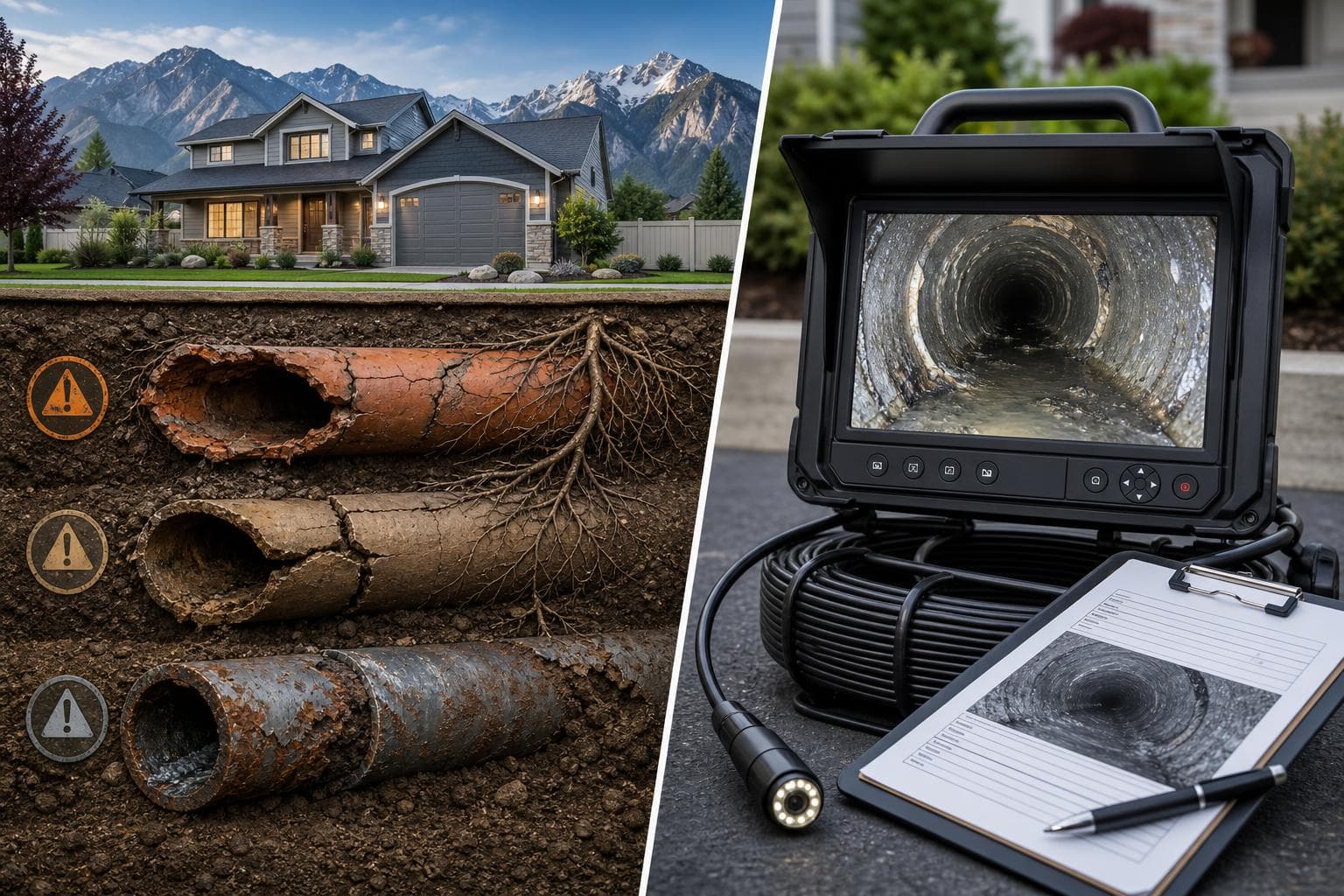
A professional sewer scope report documents:
- Pipe material — PVC, clay, cast iron, Orangeburg, or a mix
- Joint condition — offsets, separations, gaps
- Root intrusion — location, severity, and extent
- Bellies and sags — low spots where water or debris collects
- Cracks and breaks — structural failures in the pipe wall
- Blockages and buildup — grease, scale, debris accumulation
- Overall grade — functional condition and recommended follow-up
You get HD video, still photos at key points, and a written summary with severity ratings. That's evidence you can hand to your agent, a contractor, or a seller's attorney.
Side-by-side comparison
| General Home Inspection | Sewer Scope Inspection | |
|---|---|---|
| What it covers | Roof, foundation, electrical, plumbing fixtures, HVAC, structure | Sewer lateral (underground pipe from house to city main) |
| Equipment | Visual observation, basic tools | Specialized waterproof HD camera |
| Sewer line included? | No | Yes — that's the entire point |
| Typical duration | 2–4 hours | 30–45 minutes |
| Report format | Written summary with photos | Written summary, HD video, severity-rated findings |
| Who performs it | Licensed home inspector | Sewer inspection specialist |
| Typical cost | $300–$600 | $149 (standard) |
| When to book | Early in due diligence | Same — early in due diligence, ideally same week |
Why a home inspector can't just "check the sewer"
This comes up a lot. Buyers assume the home inspector will catch sewer problems because they're checking the plumbing.
Here's the distinction: a home inspector checks plumbing fixtures — the stuff you can see and touch. Faucets, toilets, water heater, visible drain lines under sinks. They might run water and confirm it drains. But "it drains" doesn't mean the sewer line is healthy.
A sewer line can have:
- Active root intrusion that hasn't caused a backup yet
- A belly collecting waste that will eventually block
- Offset joints that catch solids on every flush
- Cracked sections that leak sewage into the soil
- Orangeburg pipe (compressed wood fiber) that's collapsing
All of these can exist with zero symptoms at the faucet. The only way to see them is with a camera in the pipe.
Home inspectors know this. Many of them recommend a sewer scope as a separate inspection — because they know their own scope of work doesn't cover it.
When you need both
The short answer: almost always.
If you're buying a home — especially in Utah where clay soil, mature trees, and aging infrastructure are common — you should order both a general home inspection and a sewer scope.
They cover different systems. One doesn't replace the other. And the sewer scope is usually the cheaper of the two while protecting against one of the most expensive possible surprises.
Book both early in due diligence. The sewer scope can often be scheduled the same day or within a day of the general inspection. Get all your findings in hand before contingency deadlines so you can negotiate from evidence.
What if the home inspector says the plumbing "looks fine"?
That's about the fixtures — not the lateral. "Plumbing looks fine" in a home inspection report means:
- Faucets run
- Toilets flush
- No visible leaks under sinks
- Water heater is functional
It says nothing about the condition of the 50–100 feet of pipe buried under the yard. A home inspector who tells you the sewer is fine without a camera in the line is guessing — and most good inspectors won't make that claim.
FAQ
Does a home inspection include a sewer scope?
No. A standard home inspection covers visible, accessible systems. The sewer lateral is underground and requires a separate camera inspection.
Can I skip the sewer scope if the home inspection is clean?
A clean home inspection means the above-ground systems look good. It tells you nothing about the sewer line. The two inspections cover different things.
Should I use the same company for both?
You can, but it's not required. What matters is that whoever does the sewer scope specializes in it and provides video evidence with written findings — not just a verbal summary.
Is a sewer scope worth it on a newer home?
Yes. Newer homes can have installation defects, improper slope, poor connections, or construction debris in the line. Age alone doesn't determine sewer condition.
What if the seller already had a sewer scope done?
Review it carefully — check the date, who performed it, and what was documented. If it's more than a few months old or was done by a company that also sells repairs, consider getting your own independent scope for unbiased findings.
Bottom line
A general home inspection and a sewer scope inspection are two different inspections that cover two different systems. One checks what's visible above ground. The other checks what's buried beneath it.
Skipping the sewer scope because you already have a home inspection is like skipping a blood test because you already got an X-ray. They're looking for different things.
For most homebuyers, both inspections together cost less than a single emergency plumber visit — and they give you the full picture before you sign.
Related guides
- Sewer Scope Inspection Salt Lake City (2026): Cost, Process, and Red Flags
- 10 Utah Sewer Scope Questions Homebuyers and Realtors Should Ask
Schedule your independent sewer scope inspection